Alibarbar Vape
Introduction to Alibarbar Vapes
Alibarbar is a modern vape brand associated particularly with disposable vaping devices and high-capacity products. Its products have become increasingly visible in international vaping markets, including Australia, where disposable-vape demand has historically been significant. However, understanding Alibarbar requires separating the brand’s development from the broader invention of electronic cigarettes. Alibarbar vape | Alibarbar vape flavours | Alibarbar vapes | how to charge Alibarbar vape | Alibarbar vape australia reviews | how to recharge Alibarbar vape | Alibarbar vape Australia | Alibarbar vapes Australia | Alibarbar vape price | disposable iget bar plus hqd Alibarbar vapes
The electronic cigarette was not invented by Alibarbar. Modern e-cigarettes developed from earlier attempts to create smoke-free nicotine-delivery devices. One important milestone was the development of a commercially successful modern electronic cigarette in China in the early 2000s. Since then, vaping technology has evolved from simple cigarette-shaped devices into pod systems, refillable tanks, nicotine-salt devices and increasingly sophisticated disposable products.
Alibarbar belongs to this later generation of vaping products. Publicly available company information identifies ALIBARBAR as a vaping and nicotine-alternative business and lists 2014 as its founding year, although detailed independent historical information about the company’s original founder and early development is limited.
Some websites identify individual people as founders of Australian Alibarbar retailers, but these should not automatically be treated as the founder of the global Alibarbar brand. For educational and SEO purposes, it is therefore more accurate to state that Alibarbar dates its business history to 2014 while publicly available sources do not provide a sufficiently reliable, independently verified biography of a single global founder.
This distinction is important because numerous websites using the Alibarbar name are retailers or regional stores rather than necessarily the manufacturer or original brand company.
The Invention and Evolution of Alibarbar Vape Technology
The evolution of vaping can broadly be divided into several stages.
Early electronic cigarettes were designed to imitate traditional cigarettes. They generally had relatively small batteries, limited e-liquid capacity and simple heating systems. Their purpose was to deliver nicotine-containing aerosol without burning tobacco.
The next generation introduced refillable tanks and more powerful batteries. These devices gave users greater control over airflow, liquid and vapour production. Later, nicotine salts became increasingly popular because they allowed relatively high nicotine concentrations to be inhaled with less of the harsh sensation associated with some older freebase-nicotine liquids.
Disposable vapes represented another major change. Instead of requiring users to purchase a separate battery, tank, coil and e-liquid, manufacturers combined these components into one pre-filled device. Alibarbar’s product development belongs largely to this high-capacity disposable era.
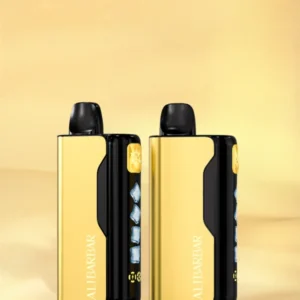
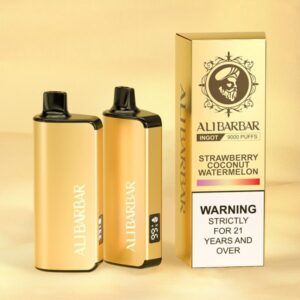
One of the brand’s best-known product concepts is the INGOT, a disposable design recognised for its metallic, gold-bar-inspired appearance. Industry reporting describes the Alibarbar Ingot as a product manufactured by Shenzhen Wain Technology and marketed around a distinctive body design, high e-liquid capacity and mesh-coil technology.
This illustrates how disposable vapes have evolved beyond simply imitating cigarettes. Modern products can incorporate:
- Mesh heating coils
- Draw-activated firing
- Larger e-liquid reservoirs
- Rechargeable batteries in some models
- LED or digital displays
- More sophisticated flavour systems
- High-capacity designs
The evolution has therefore been driven by convenience, battery technology, coil design, flavour development, industrial design and consumer demand.
However, a larger puff rating does not mean a product is safer. In fact, high-capacity nicotine devices can make it easier for users to consume nicotine repeatedly throughout the day.
The Founder, Brand History and Development
The question of who founded Alibarbar requires careful treatment because information online is inconsistent.
Some commercial websites describe Alibarbar as being founded by vape enthusiasts or industry professionals, while business databases identify 2014 as the company’s founding year. The brand’s own published material presents a story inspired by the Alibaba “Open Sesame” concept and describes Alibarbar as a brand built around flavour, exploration and product experiences.
However, that brand story should not be confused with independently verified corporate history.
The available evidence suggests that Alibarbar developed within the broader Chinese and international vaping manufacturing ecosystem before expanding its product presence into overseas markets. Some Australian-facing websites state that the brand arrived in the Australian market around 2024, although such claims are generally retailer-provided rather than official Australian government historical records.
The brand’s evolution reflects a broader transformation in the vape industry. Manufacturers have moved from simple, low-capacity products toward devices designed around convenience and long operating periods. This has made products such as the Alibarbar Ingot particularly recognisable.
Nevertheless, consumers should distinguish between:
Brand history: when a company or brand was established.
Product history: when a specific Alibarbar model was launched.
Australian availability: when a particular product became available in Australia.
These are three different dates and should not be presented as though they are the same.
Health Risks of Alibarbar and Other Vapes
It is important not to describe Alibarbar or any other vape as “safe.” The Australian Therapeutic Goods Administration states that vapes are associated with a range of health risks and that evidence concerning their effectiveness for smoking cessation remains limited.
The most significant concern with nicotine-containing Alibarbar products is nicotine dependence. Nicotine is highly addictive and repeated exposure can reinforce dependence. A high-capacity disposable can make repeated nicotine consumption particularly convenient.
Potential concerns associated with vaping include:
Nicotine dependence
Regular nicotine exposure can lead to cravings, tolerance and withdrawal symptoms. People who do not currently use nicotine should not begin vaping simply because a product is marketed as fashionable or convenient.
Respiratory effects
Vaping aerosol is not simply harmless water vapour. It can contain nicotine, flavouring substances and other chemicals. The long-term consequences of inhaling these substances are still being investigated.
Cardiovascular concerns
Nicotine can affect heart rate and blood pressure. Consequently, nicotine-containing vaping products should not be treated as risk-free consumer products.
Youth exposure
Young people are particularly important in Australia’s vaping regulations. Australian authorities have introduced extensive restrictions designed to reduce youth vaping and nicotine dependence.
Accidental exposure
Nicotine-containing liquids can be harmful if swallowed or improperly handled. Vape devices also contain batteries and electronic components that require appropriate handling and disposal.
Importantly, “safer than smoking” and “safe” are not equivalent statements. For an adult who already smokes combustible cigarettes, completely switching away from smoking may have a different risk profile from starting vaping as a non-smoker. Australian health authorities nevertheless emphasise approved smoking-cessation options and professional advice rather than presenting recreational vaping as harmless.
Alibarbar Compared With Other Vapes
Alibarbar can be compared with other vaping categories according to design, convenience, capacity and maintenance.
| Feature | Alibarbar-style disposable | Traditional disposable vape | Refillable pod system | Vape tank/mod |
|---|---|---|---|---|
| Convenience | Very high | Very high | Moderate | Lower |
| Refilling | Usually no | No | Yes | Yes |
| Maintenance | Low | Low | Moderate | Higher |
| Battery options | Model dependent | Usually integrated | Rechargeable | Rechargeable |
| E-liquid capacity | Often high | Usually lower | Varies | Varies |
| Customisation | Limited | Limited | Moderate | High |
| Portability | High | High | High | Lower |
| Waste per device | Relatively high | Relatively high | Lower over time | Lower over time |
One of Alibarbar’s distinguishing characteristics is its emphasis on high-capacity disposable designs. Industry descriptions of the Ingot have reported capacities around 20 mL and advertised puff counts of up to approximately 9,000, although specifications can vary between models and markets.
Compared with a refillable pod system, a disposable Alibarbar-style device is simpler because the user does not normally need to refill e-liquid or replace coils. The trade-off is reduced customisation and potentially greater electronic and battery waste.
Compared with traditional low-capacity disposable vapes, high-capacity products may last longer before replacement. But a high puff count should not be interpreted as a health advantage.
Australian consumers should also be aware that a product being widely advertised online does not necessarily mean that it is legally permitted for retail sale in Australia.
Australia’s Vape Laws and
Alibarbar
Australia has introduced some of the world’s strictest regulatory controls around vaping.
A major change occurred on 1 July 2024, when a national framework began regulating the importation, domestic manufacture, supply, commercial possession and advertising of vaping goods. The framework covers vaping devices, accessories and vaping substances, whether or not they contain nicotine.
Under Australia’s current framework, vapes are legally available only for therapeutic purposes, such as smoking cessation or management of nicotine dependence, and supply is restricted to pharmacy settings subject to applicable requirements. Vape shops, tobacconists and convenience stores cannot legally sell vaping products.
For adults aged 18 and over, participating pharmacies may supply certain therapeutic vapes containing 20 mg/mL nicotine or less without a prescription, subject to conditions and state or territory laws. Higher nicotine concentrations require a prescription.
There are also restrictions on product presentation and flavours. Australian government information states that therapeutic vape flavours are restricted to mint, menthol and tobacco, and therapeutic vaping products must comply with plain pharmaceutical packaging requirements.
Another important point concerns disposable products. The Australian Department of Health states that single-use disposable vapes cannot be purchased in pharmacies.
Personal importation is also prohibited. Consumers cannot simply order vaping products from overseas websites for personal use and have them legally imported into Australia. Australian Border Force can seize unlawful vaping imports.
Businesses face significant consequences for breaking these rules. The TGA reports that unlawful importation, manufacture, advertising, supply and commercial possession can attract substantial civil and criminal penalties.
Therefore, an Alibarbar product appearing on an Australian website should not automatically be assumed to be legally saleable in Australia. Consumers should check the current TGA notified-vape information and applicable state or territory requirements.
Conclusion: Understanding Alibarbar in the Australian Market
Alibarbar represents the modern evolution of disposable vaping rather than the invention of vaping itself. Public business information identifies 2014 as the brand/company founding year, while detailed, independently verified information about a single original founder is limited.
The brand’s development reflects the wider vape industry’s movement toward compact, high-capacity devices, distinctive industrial designs, mesh coils, nicotine salts and simplified user experiences. Products such as the Alibarbar Ingot demonstrate how far disposable vaping technology has developed compared with early electronic cigarettes.
At the same time, technological development does not eliminate health concerns. Nicotine remains addictive, vaping carries health risks, and no vape should be presented as harmless. Australia’s regulatory system reflects these concerns by limiting vaping products to therapeutic purposes and tightly controlling their supply.
For Australians researching Alibarbar, the most important lesson is that product popularity, online availability and legal availability are three different things. A product may be internationally recognised yet still not be legally available for ordinary retail sale in Australia.
The safest approach is to verify the specific product against current Australian regulatory requirements, consult a pharmacist or healthcare professional when considering vaping for smoking cessation, and remember that vaping is not risk-free. Australia’s rules can also change, so consumers and businesses should rely on current information from the Therapeutic Goods Administration, Department of Health and state or territory health authorities rather than outdated retailer claims.
Alibarbar vape | Alibarbar vape flavours | Alibarbar vapes | how to charge Alibarbar vape | Alibarbar vape australia reviews | how to recharge Alibarbar vape | Alibarbar vape Australia | Alibarbar vapes Australia | Alibarbar vape price | disposable iget bar plus hqd Alibarbar vapes
Showing all 4 results
-
Alibarbar Vape
Alibarbar Ingot 20000 Disposable Vape
Original price was: $53.00.$50.00Current price is: $50.00. -
Alibarbar Vape
Alibarbar Ingot 9000 Disposable Vape
Original price was: $55.00.$51.00Current price is: $51.00. -
Alibarbar Vape
Alibarbar Pandora 7000 Disposable Vape
Original price was: $55.00.$51.00Current price is: $51.00.